Tutorial: How to correct Ford Mustang Speedmeter (if your car is just off
from the factory or you've changed tire sizes) with Forscan and VXDIAG
J2534 passthru.
What's required:
A laptop running Windows
Free Forscan software with a free extended license
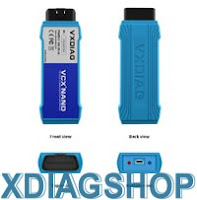
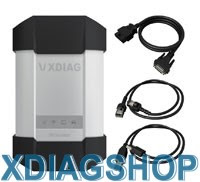
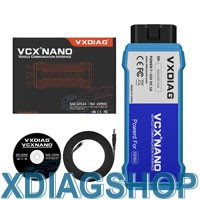
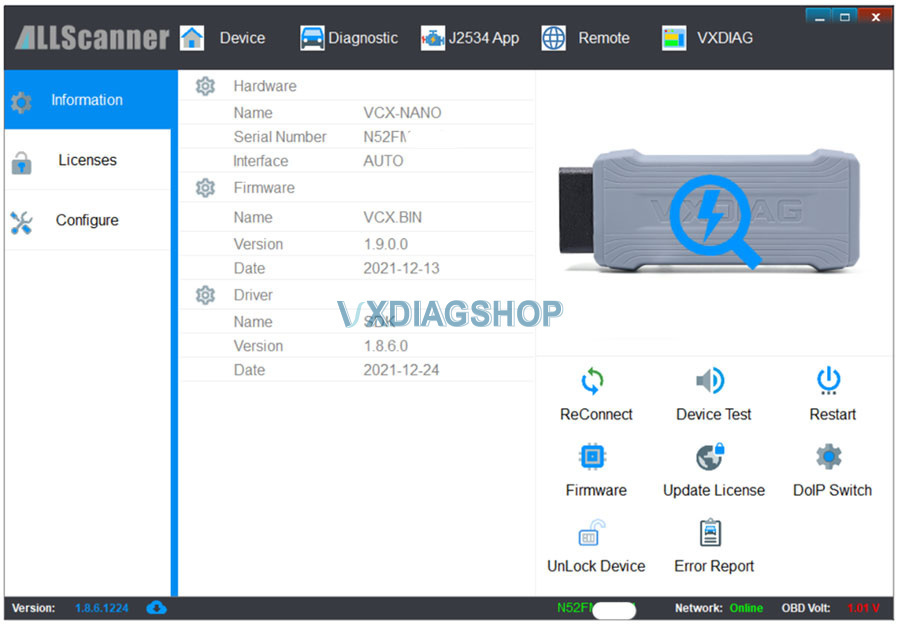
OBD scanner that works with Forscan ((VXDIAG
VCX NANO Ford, VCX
SE pro or other J2534 passthru))
How does it work?
For 2015-2019 Mustangs, Ford programs the tire size of the car on BCM line
726-12-01 in the second four-digit block of hex. For 2020+ Mustangs, it's split
between 726-15-01 and 726-15-02 as described below. It's stored as the nominal
circumference of the driven wheel in millimeters with a revs/mile conversion
factor of 96.7%. To save you the trouble of doing a bunch of math and
conversions between decimal and hexadecimal, I've come up with a hex calculator
that you can use here: click here
This is covered in the spreadsheet, but for example my 2017 GT PP currently
has this in the BCM as-built:
726-12-01 xxxx 0858 xxxx
If I changed my rear tires to 305/35R19's, my calculated value is this:
726-12-01 xxxx 0843 xxxx
The x's mean to leave whatever value is already there.
2015-2019 Mustangs share the 726-12-01 address. For 2020+ Mustangs, the
location has changed to this:
726-15-01 xxxx xxxx ABxx
726-15-02 CDxx xxxx
xxxx
ABCD = your calculated value. It's split between the two addresses for 2020+
cars.
You also have two options here. You can simply enter the size of your current
rear tires as in my example above, and using the nominal diameter of that tire
size the calculator will give you a hex value you can program to get pretty
close (maybe even dead on) with the speedometer. Tire manufacturers vary of
course, and your car's speedometer may be a little weird. So below the tire size
calculator is a truing calculator that relies on a precise measurement from
GPS.
As stated in the calculator, I recommend that you use a GPS that can output
in tenths of a mile per hour, that you set the cruise on level
ground as high as reasonable (eg 75mph) and that you use the needle
rather than the digital speedo or digital cruise setting to set your speed,
since the digital outputs are rounded to the nearest whole MPH. That is to say,
you might see that the car is set to 75mph, but internally the car could be set
to 74.5 or 75.4, and you'd never know because it's rounded before it's shown to
you. Here is an example screen showing tenths of a MPH from a Garmin on the
satellite info page (press and hold on the satellite reception strength bars in
the upper left corner to get to this page.)
Try to set the needle exactly on one of the MPH hash marks on your
speedometer for best results. Move your head to the right to eliminate parallax
error at that speed, see the below video.
FWIW, if you have other Ford vehicles this seems to work on them as well.
I've personally confirmed that it works on F150s so if you've got a giant
bro-dozer with 35″ tires, it's time to fix that speedometer!
I have a DTC now.
You WILL get a non-MIL DTC P160A (Control Module Vehicle Options
Reconfiguration Error) when you change this in the PCM.
Thanks to the FORScan devs and some beta testing adventurers, we are able to
reliably remove this DTC now using a new feature.
This new feature is only available in FORScan 2.3.11 or higher.
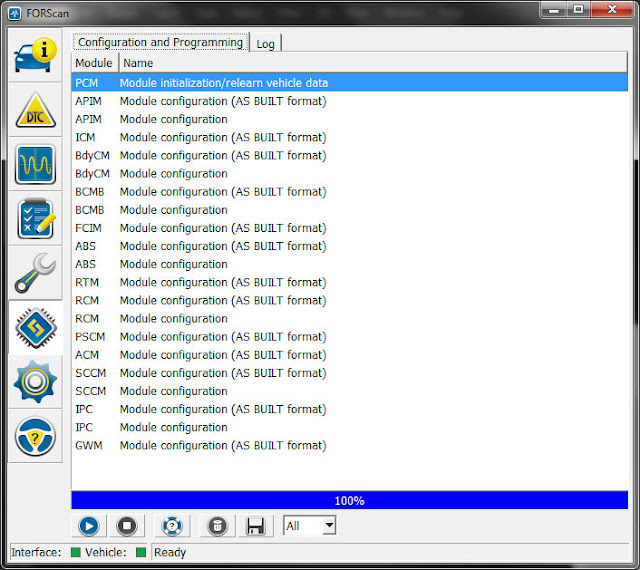
What you want to do is go into the computer-chip-looking tab in FORScan where
you normally edit as-built. At the top, you'll see a new function for the PCM –
"Module initialization/relearn vehicle data" – see this screen shot:
Highlight that function and hit the play button, and follow the onscreen
instructions to the letter.
Once it's finished, rescan for DTC's and remove the P160A DTC. Go drive
around and scan for DTC's again. You should be in the clear.
Note that if you ever wish to return to stock, you'll have to run this
procedure again after setting the as-built values for the tire size back to
stock.
What should I do if I haven't changed my tires but my speedometer doesn't
match my cruise setting? The speedo reads fast!
I feel this needs to be addressed, because people don't seem to believe
it.
There is a *large* amount of parallax error in these cars when the needle is
pointed up, which it is when you're at highway speeds of around 70-80. At those
speeds your speedometer will appear to read 2-3mph faster than your cruise
setting.
Why? The needle is thick and spaced out from the gauge face, so the perceived
"needle" (the illuminated red center section) will give a great deal of parallax
error unless you're viewing perfectly perpendicular to the needle.
Unfortunately, the designers chose to put the speedometer in such a position
that reading the speedo with your head perfectly perpendicular to the needle
means moving your head WAY right, far away from any natural position in the
car.
www.vxdiagshop.com